7. Software Development Lifecycles
HND in Software Engineering
About 7. Software Development Lifecycles
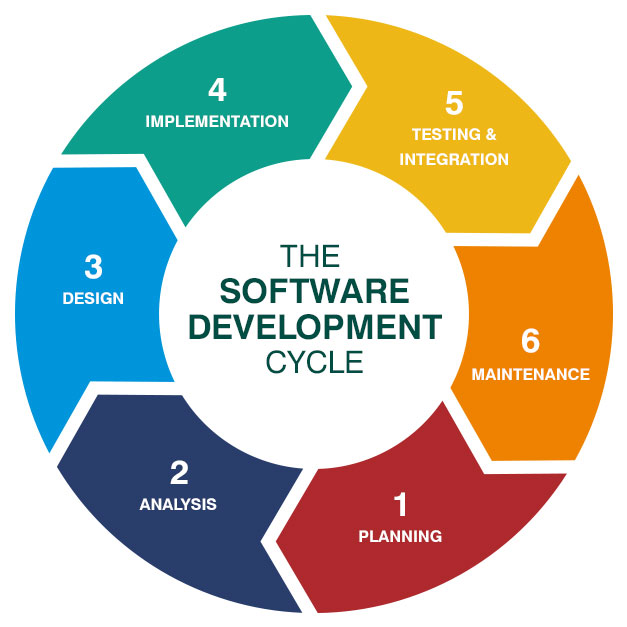
The software development lifecycle is an integrated process that promotes building good quality, secure software throughout the entire development process. The aim of this unit is to give students the knowledge and skills needed to understand software development lifecycles so that they can demonstrate their knowledge by implementing a software development lifecycle with a suitable methodology.
The unit introduces students to lifecycle decision making at different stages of the software development process. They will examine various lifecycle models and learn to appreciate their particular characteristics in order to understand for which project environments they are most appropriate. Theoretical understanding will be translated into practical skills through an actual software development lifecycle project. Students will become confident in the use of particular tools and techniques relevant to a chosen methodology.
Among the topics included in this unit are iterative and sequential models of software development lifecycles and reference frameworks for initially capturing conceptual data and information through a feasibility study, and requirement gathering techniques through to analysis, design and software implementation activities. Students will develop skills such as communication literacy, critical thinking, analysis, reasoning and interpretation, which are crucial for gaining employment and developing academic competence.
Program Learning outcome:
By the end of this unit students will be able to:
LO1 Describe different software development lifecycles
LO2 Explain the importance of a feasibility study
LO3 Undertake a software development lifecycle
LO4 Discuss the suitability of software behavioural design techniques.
TextBook Name:
Smart, J. F. (2014) BDD in Action: Behavior-driven development for the whole software lifecycle. Manning.